

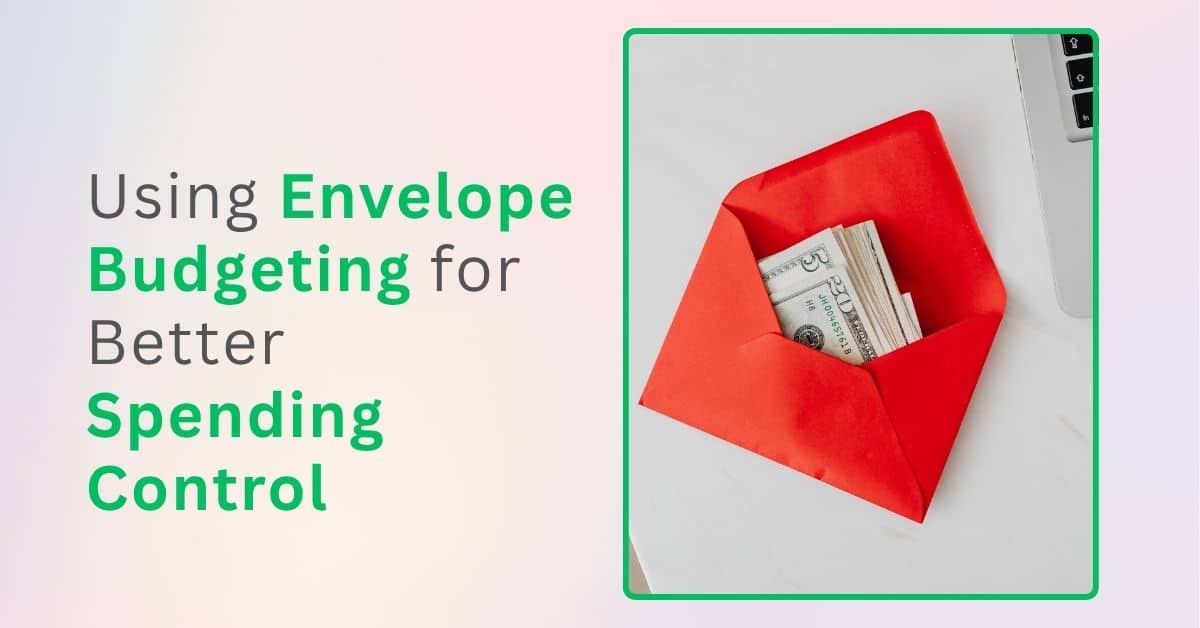
Using Envelope Budgeting for Better Spending Control
Master Your Money with the Cash Envelope System
Do you finish the month wondering where all your money went? The envelope budgeting method offers a refreshingly simple solution—transforming abstract spending into tangible, visible money management that actually works. By dividing cash into labeled envelopes, this time-tested system creates an automatic spending limit that modern apps struggle to replicate.
What Is Envelope Budgeting?
Envelope budgeting, also called the cash envelope system or cash stuffing, is a physical budgeting method where you divide your monthly income into separate envelopes, each labeled for a specific spending category. You place actual cash into these envelopes at the start of the month, and the simple rule is unbreakable: when an envelope is empty, spending in that category stops until the next month begins.
This approach strips away the complexity that digital budgeting often introduces. Instead of tracking transactions across multiple apps, you hold your budget literally in your hands—making every rupee visible and every spending decision intentional.
How the Envelope Budgeting Method Works
The mechanics are straightforward, yet transformative:
- Calculate discretionary income: Start with your monthly take-home pay and subtract fixed expenses like rent, utilities, insurance, and loan payments.
- Identify spending categories: Decide which areas need cash-based control—typically groceries, dining out, entertainment, shopping, and transportation.
- Allocate amounts to envelopes: Withdraw cash and place predetermined amounts into labeled envelopes for each category.
- Spend only what’s allocated: Throughout the month, use only the cash from the corresponding envelope for each purchase.
- Stop when empty: Once an envelope is depleted, wait until next month or make strategic adjustments if truly necessary.
- Review and adjust: At month’s end, analyze spending patterns and refine envelope amounts for the following cycle.
The Real Benefits of Envelope Budgeting
1. Immediate Spending Control
The psychological power of envelope budgeting for spending control cannot be overstated. When you physically pull cash from an envelope, the act feels different from swiping a card. Research shows that people spend more cautiously with tangible money than with digital transactions—a phenomenon called the “pain of paying.” This creates a natural psychological brake on impulse purchases.
One practical advantage: you cannot overspend. There’s no overdraft fee, no credit card bill surprise, no way to borrow against tomorrow’s money. The envelope is empty when it’s empty.
2. Builds Spending Awareness
Cash envelope system users develop genuine clarity about their habits. Unlike digital budgeting, where expenses blur together on a statement, physically watching your cash decrease creates awareness with each transaction. This visibility often reveals wasteful spending patterns that remained hidden before.
For example, someone tracking discretionary spending might discover they spend ₹5,000 monthly on impulsive café visits—a revelation that digital transactions often obscure. This awareness becomes the foundation for genuine behavior change.
3. Reduces Debt and Credit Card Dependence
By using cash exclusively for discretionary spending, you eliminate temptation to accumulate credit card debt. No more “I’ll pay it off next month” rationalizations. This approach is especially valuable for those recovering from overspending habits or building financial discipline from scratch.
4. Simplifies Complex Budgets
Rather than managing dozens of digital categories, accounts, and app notifications, envelope budgeting reduces financial management to something tangible and comprehensible. This simplicity appeals particularly to:
- Individuals new to budgeting
- Couples managing shared finances
- Parents teaching children money management
- Anyone overwhelmed by complex budgeting systems
Creating Your Envelope Budgeting System
Step 1: Choose Your Budget Framework
The 50/30/20 rule provides an excellent starting point for envelope budgeting:
| Category | Percentage | Purpose |
|---|---|---|
| Needs | 50% | Rent, groceries, utilities, insurance, transportation, essential bills |
| Wants | 30% | Dining out, entertainment, shopping, subscriptions, hobbies |
| Savings & Debt Payoff | 20% | Emergency fund, investments, debt repayment, retirement contributions |
Step 2: Customize Categories for Your Life
While the 50/30/20 framework provides structure, your envelope categories should reflect your actual spending priorities. Common envelope categories include:
- Groceries and household supplies
- Dining out and coffee
- Entertainment and subscriptions
- Shopping and clothing
- Transportation and fuel
- Personal care and wellness
- Gifts and special occasions
- Emergency buffer
Remember: bills paid automatically (rent, insurance, utilities) typically don’t require envelopes, as these fixed expenses remain constant and are managed separately.
Step 3: Calculate Realistic Amounts
Track your spending for one month to establish baseline amounts. Review past bank and credit card statements to identify average spending in each category. This data-driven approach prevents the frustration of under-allocating to essential categories.
For instance, if previous spending shows monthly dining out expenses of ₹4,000, allocating ₹2,500 to the restaurant envelope will create friction rather than discipline.
Step 4: Set Up Physical or Digital Envelopes
Physical envelopes: Traditional paper or plastic envelope wallets remain popular. Many people use color-coded envelopes for quick visual reference—red for needs, blue for wants, green for savings.
Digital envelope apps: If physical cash feels impractical, envelope budgeting apps like Goodbudget, YNAB (You Need A Budget), or RealBudget replicate the system digitally. These apps maintain the envelope psychology while accommodating modern banking.
Step 5: Establish Your Spending Rules
The success of envelope budgeting depends on consistent rules:
- No borrowing between envelopes: Resist the temptation to “borrow” from next month’s entertainment envelope for groceries. This undermines the entire system.
- Use only allocated cash: If your grocery envelope is empty, get creative with pantry meals rather than raiding other envelopes.
- No overdrafts or credit card swipes: Envelope budgeting only works when you truly stop spending when cash runs out.
- Review weekly: Check envelope balances weekly to stay aware and adjust habits before month’s end.
Real-World Example: The Envelope Budgeting Method in Action
Consider Ravi, a salaried professional in Bangalore earning ₹80,000 monthly after taxes:
Ravi’s Envelope Breakdown:
| Envelope | Amount (₹) | Category |
|---|---|---|
| Rent & Utilities | 32,000 | Automatic debit (not an envelope) |
| Groceries | 8,000 | Needs |
| Dining Out | 4,000 | Wants |
| Entertainment & Subscriptions | 3,500 | Wants |
| Shopping | 3,000 | Wants |
| Transportation | 2,500 | Needs |
| Emergency Fund | 12,000 | Savings |
| Investments | 8,000 | Savings |
| Miscellaneous Buffer | 7,000 | Flexible use |
Result: Within three months of using the envelope system, Ravi discovered he was spending ₹1,500 monthly on unused streaming subscriptions and reduced dining out expenses by ₹800 simply by being aware. His monthly savings increased by 12%, enabling him to accelerate his investment goals.
Envelope Budgeting for Couples
When two people manage shared finances, the envelope system creates clarity and accountability:
- Establish joint envelope allocations: Both partners should agree on category amounts and priorities.
- Designate responsibility: Assign specific envelopes to each person to prevent double-purchases and confusion.
- Regular review meetings: Schedule monthly budget reviews together to discuss spending patterns and adjust for upcoming months.
- Create transparency: Digital envelope apps with multi-user access enable real-time visibility, preventing surprises.
Challenges and Solutions
| Challenge | Solution |
|---|---|
| Cash security concerns | Store cash in a safe location; use digital envelope apps as an alternative |
| Difficulty for online purchases | Reserve card spending for fixed bills; use backup debit card only when necessary |
| Couple coordination issues | Use shared digital apps or maintain joint envelope management system |
| Missing interest earnings | Direct savings envelope amounts into high-yield savings accounts between budget cycles |
| Temptation to move funds between envelopes | Establish strict rules and automate spending limits through digital tools |
Modern Alternatives: Digital Envelope Budgeting
Not everyone thrives with physical cash. Digital envelope systems preserve the methodology while accommodating modern banking:
- Goodbudget: Mimics physical envelopes in app form; free version available; great for families.
- YNAB: Advanced envelope budgeting with bank synchronization; paid service with learning curve.
- Beyond Budget: Android-focused envelope app with spending tracking and reporting.
- Google Sheets + Bank Transfers: Create custom envelope categories by maintaining separate savings accounts or digital wallets for each spending category.
The psychology remains identical whether your envelopes are physical or digital—you’re creating visible boundaries and intentional spending categories.
Key Takeaways for Envelope Budgeting Success
Implement these principles for maximum effectiveness:
- Start small: Begin with just 3-4 envelope categories rather than attempting complex systems immediately.
- Be realistic: Allocate amounts based on actual spending patterns, not wishful thinking.
- Automate fixed expenses: Keep regular bills on automatic payment to focus envelope budgeting on discretionary spending.
- Review monthly: Spending patterns shift seasonally; adjust envelope amounts accordingly.
- Build flexibility: Include a “miscellaneous” or “buffer” envelope (5-10% of spending total) for unexpected expenses.
- Combine with other tools: Envelope budgeting works beautifully alongside the 50/30/20 rule, zero-based budgeting, or other methodologies.
Next Steps: Starting Your Envelope Budgeting Journey
Envelope budgeting transforms abstract spending into concrete, manageable categories. Whether you prefer physical cash or digital alternatives, this system delivers results through simplicity and visibility.
Your action plan:
- Track your current spending for one month to establish baseline categories and amounts.
- Choose between physical envelopes or a digital app based on your lifestyle and preferences.
- Implement the 50/30/20 rule as your initial framework, customizing as needed.
- Start with your next paycheck—commit to a full month before evaluating effectiveness.
- Review and refine after 30 days, then adjust categories based on real spending data.
Related topics to explore: zero-based budgeting, the 50/30/20 rule, emergency fund strategies, debt repayment methods, and beginner-friendly investment frameworks.